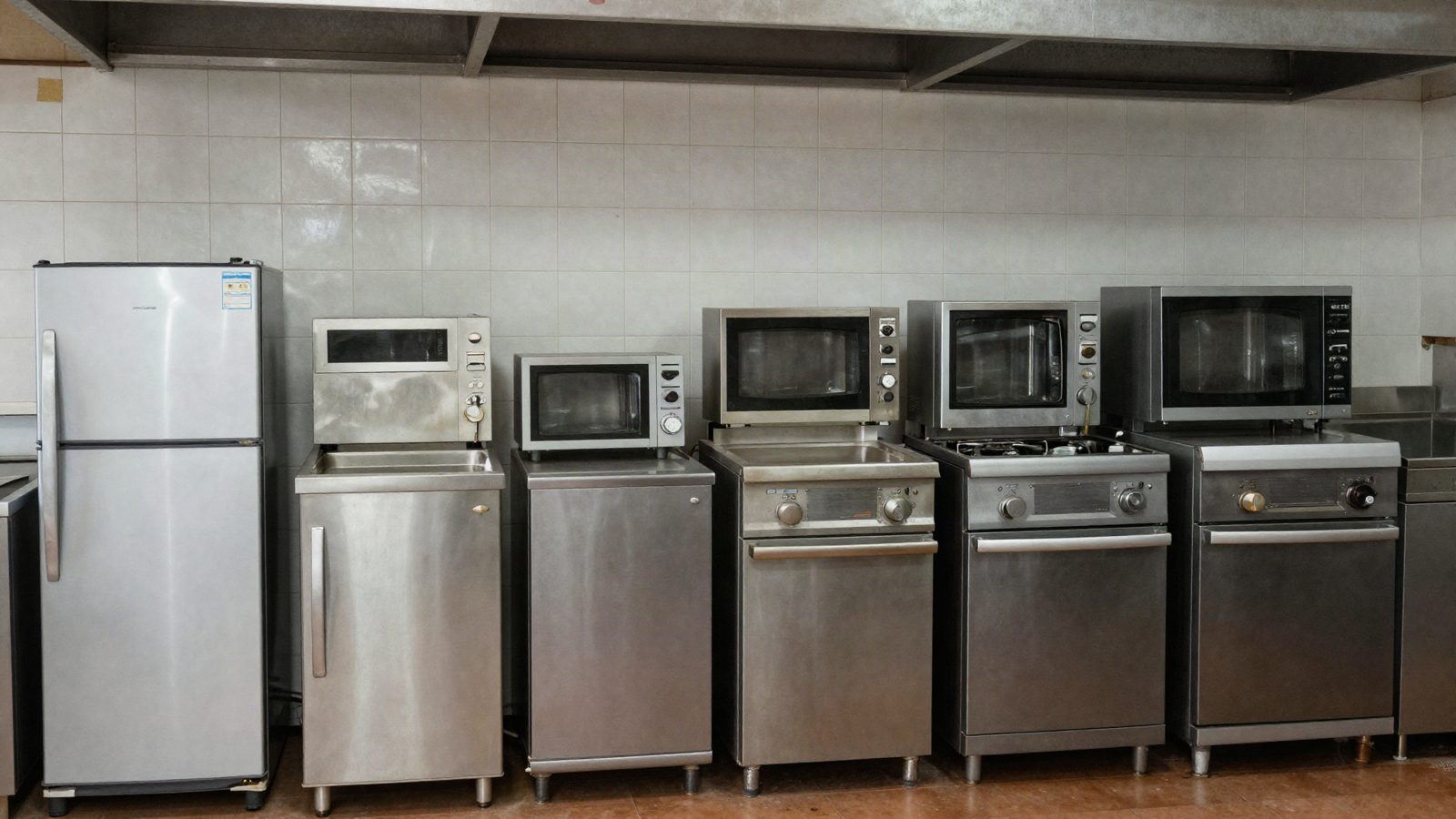
A single kitchen can hold 3 ownership positions at once: units the restaurant owns, units leased from a finance company, and units placed by a supplier as part of a supply agreement. Each decides who you invoice, and the record has to carry which is which.
The short version
The technician does not care who owns the ice machine. The office does, because ownership decides who pays, who authorizes, and sometimes whether you are allowed to touch it.
The default assumption is that the customer owns everything in their kitchen. Frequently they do not, and the exceptions cluster in predictable places: ice machines, coffee equipment, beverage dispense, and occasionally the larger cooking line in a newly fitted site.
The cost of getting it wrong is an invoice to somebody who will not pay it, and a conversation about work that should have been authorized elsewhere.
The 3 positions and what each one changes
| Position | Who authorizes | Who pays |
|---|---|---|
| Customer-owned | The customer, within their own limits | The customer |
| Leased or financed | The customer, usually, subject to lease terms | The customer, sometimes the lessor for covered items |
| Supplier-placed | Frequently the supplier, not the site | The supplier, under their agreement |
Row three is the one that catches service companies out. A beverage dispense system or a coffee brewer placed by a supplier under a product agreement is often serviced by that supplier's own arrangement, and a repair carried out at the site's request may not be payable by anyone.
Ask the question at the survey, not at the invoice
One line per piece of equipment, captured when you first record the equipment.
Kitchen staff usually know, and they are never asked. "Is this yours, leased, or did a supplier put it in" takes ten seconds per unit during an equipment survey and answers a question that otherwise surfaces during a dispute.
Where they do not know, the plate and the paperwork help. Leased equipment frequently carries an asset label from the finance company, and supplier-placed units usually carry branding that is not the manufacturer's.
Record it as a field on the equipment record with a note of who to contact. Roopairs holds equipment records with manufacturer, model, serial number, service history and warranty agreements, which is where the ownership position and its contact belong so a dispatcher sees them before assigning.
Leased equipment: read who the service obligation sits with
The lease decides, and the site frequently has not read it.
Some leases are finance only, meaning the customer owns the service obligation and calls whoever they like. Some are full-service, where the lessor arranges maintenance and a repair the site commissioned independently may not be reimbursed.
What to establish once per leased unit: who arranges service, whether a repair needs the lessor's authorization, and who the invoice goes to. Once answered it is stable for the life of the lease.
The practical risk is a site calling you in a breakdown because you are quicker, when the lease says otherwise. Doing the work is usually right and the conversation about who pays should happen before you leave rather than three weeks later.
Supplier-placed equipment needs the most caution
Beverage, coffee and ice are where this concentrates.
Equipment placed as part of a supply agreement generally belongs to the supplier, who has their own service arrangement and their own technicians or contractors.
Two consequences. A site asking you to fix it may be asking for something the supplier would do at no cost to them, and your invoice may have no payer. And working on somebody else's equipment can affect their arrangement with the site, which is a relationship you did not sign up to be part of.
The workable rule: identify these units on the record, and when one is reported, check before dispatching rather than after. A short call to the site asking who normally services it resolves nearly all of them.
What the record has to carry
Four fields beyond the usual, and they are cheap to capture and expensive to reconstruct.
- Ownership position, meaning owned, leased or supplier-placed
- Who to contact when it is not the site, with a name or a number
- Whether authorization is required before work, and from whom
- Who receives the invoice, which is the question all three of the above are really answering
Those sit alongside manufacturer, model, serial number and service history, and they turn an awkward call into a lookup. A dispatcher who can see "supplier-placed, contact the account manager first" before assigning has avoided the entire problem.
What changes for you commercially
Two effects, and one of them is an opportunity rather than a risk.
The risk is unpaid work, and it is straightforward: an invoice to a site for equipment somebody else is responsible for is a credit note in most cases.
The opportunity is that lessors and suppliers with equipment placed across many sites need service companies. A service company that identifies who owns what has also identified a set of potential accounts, and knowing which units in your customers' kitchens belong to one lessor is a specific conversation to have with them.
That is only available where the ownership position was captured, which is the argument for asking the question at survey time rather than treating it as an exception to handle when it arises.
Handling a unit whose ownership is unclear
A rule for the moment it happens, because it happens during a breakdown.
Attend and diagnose, since a kitchen down is not improved by an ownership question. Capture the equipment properly including the nameplate photograph and any asset labels. Then establish the position before doing anything irreversible or expensive.
Where it cannot be established and the repair is small, do it and sort the billing afterwards. Where it is significant, a phone call from site to whoever the customer thinks owns it takes five minutes and saves an unpaid invoice.
Then record what you found, so the next call about that equipment starts from an answer rather than the same question.
Roopairs runs a product tour where you can see equipment records with warranty and service history held per piece of equipment.
What service companies in the trade say
“It tracks technicians in the field, cust information, job locations, parts & pricing, vendor information and job scheduling.” — D. Williams
Also worth reading
- Health Inspections and Your Service Records
- Restaurant Software vs Service Company Software
- The future of IoT for commercial kitchen repair companies
Frequently asked questions
Why does equipment ownership matter to a service company?
Because it decides who authorizes the work and who receives the invoice. A kitchen can hold customer-owned, leased and supplier-placed units side by side, and the technician cannot tell them apart by looking.
Which equipment is usually not owned by the restaurant?
Ice machines, coffee equipment and beverage dispense most often, and occasionally the larger cooking line in a newly fitted site. Leased units frequently carry a finance company asset label and supplier-placed units usually carry branding that is not the manufacturer's.
What should you ask during an equipment survey?
Whether each unit is owned, leased or supplier-placed, and who to contact when it is not the site. Ten seconds per piece of equipment, and kitchen staff usually know because nobody has ever asked them.
What is the risk with supplier-placed equipment?
Your invoice may have no payer, because the supplier has their own service arrangement and would have covered it. Working on it can also affect their arrangement with the site, which is a relationship you did not sign up to.
What does the equipment record need to hold?
Ownership position, who to contact when it is not the site, whether authorization is required before work, and who receives the invoice. Those four alongside manufacturer, model, serial and service history turn an awkward call into a lookup.
What do you do when ownership is unclear during a breakdown?
Attend and diagnose, capture the equipment including the nameplate and any asset labels, then establish the position before anything irreversible or expensive. Small repairs can be sorted afterwards. Significant ones need a five-minute call from site.
See how Roopairs can help your service business scale
The all-in-one platform built for commercial kitchen service companies. Dispatch, invoicing, parts ordering — all in one place.
Book a product tour →