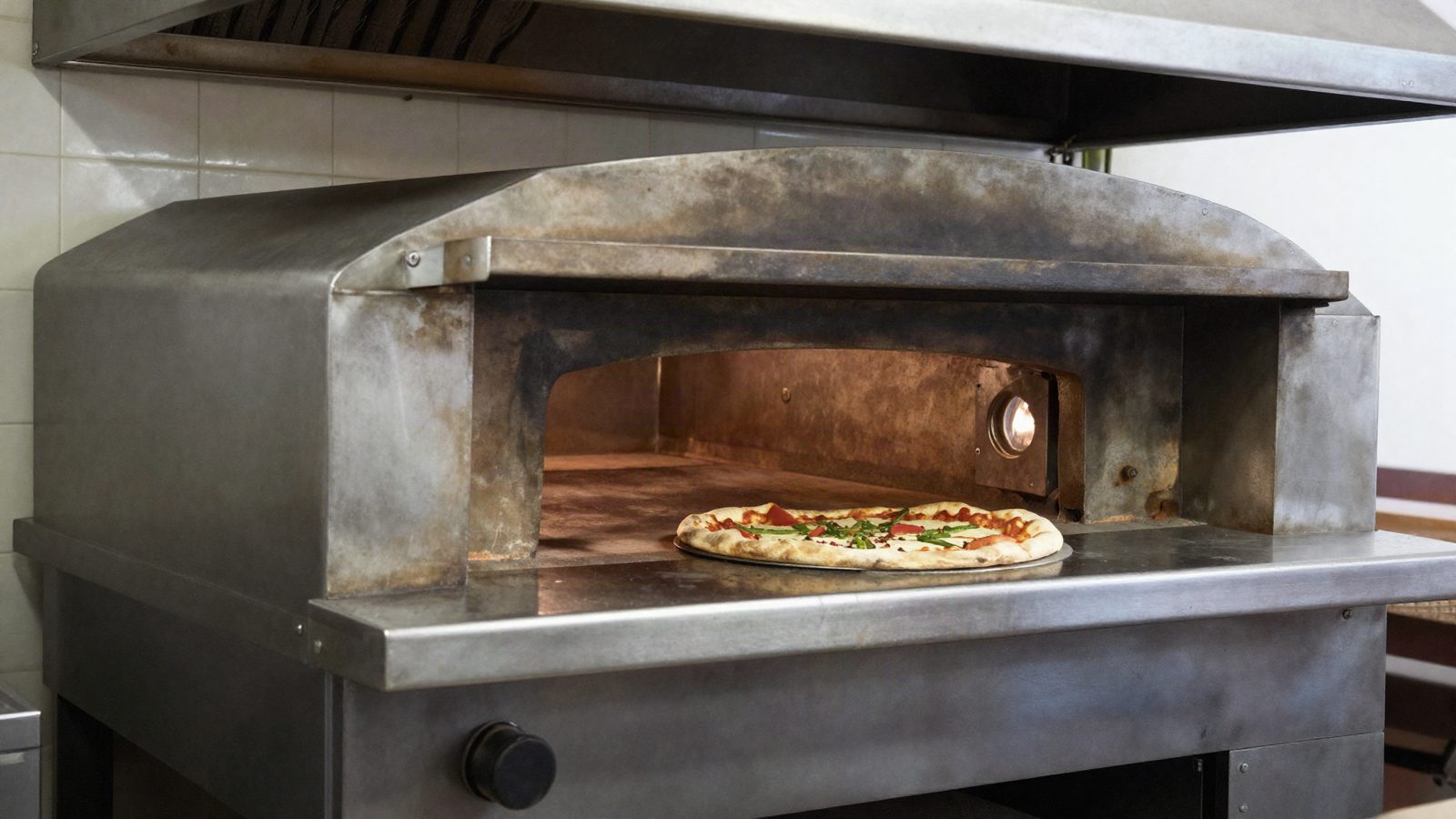
A kitchen with 14 pieces of equipment has 14 maintenance schedules, not 1. Address-level PM produces a quarterly visit where some equipment is over-serviced and the units that fail are the ones on the wrong interval. Hold the schedule on the equipment and cluster the visits afterwards.
The short version
The way most planned maintenance gets set up: a customer signs for quarterly visits, the visits go in the calendar against the site, and a technician turns up four times a year and works through whatever is there.
That is one interval applied to a room full of equipment with different needs. A fryer, a walk-in condenser, an ice machine and a combi oven do not want the same attention on the same day, and treating them as one visit means at least some of them are on the wrong schedule.
The alternative is not more visits. It is holding the interval on each piece of equipment, then grouping what is due into visits. Same number of trips, work aimed at the equipment that needs it.
What address-level PM actually produces
Four failures, and service companies usually notice the fourth first.
- Over-servicing. Equipment on a quarterly visit that would be fine annually, consuming time on every trip
- Under-servicing. The units that need attention monthly, particularly refrigeration in a hot kitchen, getting it four times a year
- No record of what was actually done per piece of equipment. The visit is recorded, so nobody can tell you when that specific ice machine was last serviced
- Breakdowns on maintained equipment. The one that gets noticed, and the one that costs you the contract
The third is the quietly expensive one. When a customer asks why a unit under a maintenance contract failed, the answer needs to be a date and a task list for that equipment. "It was on the quarterly" is not an answer, and it reads as though nobody knows.
Intervals belong to equipment, and they differ
Three things set the interval, and equipment type is only the first.
| Driver | What it changes |
|---|---|
| Equipment type | The baseline. Refrigeration, cooking and warewashing have different needs |
| Duty and environment | A condenser in a hot, greasy kitchen fouls faster than the same unit elsewhere |
| This unit's own history | A piece of equipment with three faults in a year has earned a shorter interval than its twin |
The third driver is the one that only exists if history sits on the equipment. It is also where PM stops being a template and starts being worth the money: a program that tightens the interval on the units that keep failing and relaxes it on the ones that never do.
The manufacturer's recommendation is the starting point rather than the answer. It describes the equipment in general conditions, and a commercial kitchen is not general conditions.
Clustering visits without losing the schedule
The objection to asset-level PM is that it means more trips. It does not, if the scheduling is done in the right order.
The sequence:
- Each piece of equipment carries its own interval and its own task list
- The system surfaces what is due at a site in a period, meaning the next month or the next quarter
- You build a visit around the due items, and pull forward anything due shortly after
- The visit records what was done per piece of equipment, and each piece of equipment's clock resets independently
Step three is what keeps trip count sensible. A unit due in five weeks gets done on today's visit because you are standing in front of it, and its next due date moves accordingly. That is a small optimization and it is the difference between an asset-level program that works and one that generates visits nobody wants to make.
Roopairs holds planned maintenance against the equipment record rather than the address, which is what makes the due list a per-equipment question and the visit a grouping decision.
The task list is per piece of equipment too
A generic PM checklist is the second half of the same problem.
A checklist that says "check refrigeration" produces a tick. A checklist for that walk-in that names the condenser clean, the door seals, the defrost cycle, the temperatures recorded and the drain line produces evidence and a comparable record across visits.
The value of per-equipment task lists shows up twelve months later, when the readings from four visits sit side by side and something is trending. That comparison is only possible where the same tasks were performed and recorded the same way each time.
It also settles the disputes. A customer whose fryer failed six weeks after a PM visit is asking a reasonable question, and a task list with dates and readings answers it.
What it does to the commercial conversation
Asset-level PM is the version a customer can be shown.
A quarterly visit is a line on an invoice. A schedule of fourteen equipment with intervals, task lists and a service history each is a program, and it is priced differently because it is visibly different.
It also makes the contract adjustable in a way address-level PM is not. A group that wants to reduce cost can move specific units to longer intervals with a conversation about risk on each, rather than cutting the visit count and hoping.
And when equipment is added or replaced at a site, the schedule updates by adding the equipment rather than by renegotiating the visit pattern.
Moving from address-level without a project
You do not need the full asset list to start, though you will end up with one.
Start with the equipment where interval genuinely matters: refrigeration, anything with a history of failure, and the units whose downtime closes the kitchen. That is often five or six pieces of equipment per site rather than twenty.
Put those on their own intervals with their own task lists. Leave everything else on the existing visit pattern. The next PM visit captures the rest as the technician works through it.
Within a couple of cycles the schedule is asset-level for the equipment that matters and the visit count has not moved. That is a better outcome than a migration project, and it is the version that actually gets done.
Roopairs runs a product tour where you can see maintenance schedules held on equipment records with the service history behind each piece of equipment.
What service companies in the trade say
“Have used several other programs over the years and have always had to find work arounds to adapt them to the needs of our industry & was always given the excuse that the program is designed for something else. This is the first program actually designed for kitchen equipment repair.” — Dena A Vecchetti
Also worth reading
- Equipment Asset Tracking: The Equipment Needs a File
- Restaurant Equipment Maintenance Software
- The future of IoT for commercial kitchen repair companies
Frequently asked questions
Why should planned maintenance be scheduled per piece of equipment?
Because a kitchen holds equipment with genuinely different needs, and one interval across all of it means some units are over-serviced and others under-serviced. It also means there is no record of when a specific piece of equipment was last maintained, which is the question a customer asks after a failure.
Does asset-level PM mean more visits?
No, if the scheduling runs in the right order. Each piece of equipment carries its interval, the system surfaces what is due at a site in a period, and you build a visit around it, pulling forward anything due shortly after. Trip count stays similar and the work is aimed better.
What sets the interval for a piece of equipment?
Equipment type as the baseline, duty and environment as the adjustment, and the unit's own service history as the correction. The third only exists where history sits on the equipment, and it is what turns a template into a program worth paying for.
Should task lists differ per piece of equipment?
Yes. A generic instruction produces a tick, while a named task list produces readings and evidence that can be compared across visits. That comparison is what lets you see something trending before it fails.
How does this change the customer conversation?
A quarterly visit is a line on an invoice. A schedule of named equipment with intervals, tasks and history each is a program, and it can be adjusted per unit rather than by cutting the visit count.
How do we move over without a project?
Start with refrigeration, anything with a failure history, and the units whose downtime closes the kitchen, which is usually five or six pieces of equipment per site. Leave the rest on the existing pattern and capture them as visits happen.
See how Roopairs can help your service business scale
The all-in-one platform built for commercial kitchen service companies. Dispatch, invoicing, parts ordering — all in one place.
Book a product tour →