When every caller says emergency, urgency has stopped being a sorting field. 4 questions rank a call in about 30 seconds, and the 1 that does most of the work is not how urgent it is but what stops if nobody attends.
The short version
A commercial kitchen dispatcher takes eleven calls in a morning and each one is described as urgent. All eleven are true from the caller's position and they cannot all be first.
What breaks at that point is not the schedule, it is the ranking. A priority field where everything is priority one sorts nothing, and the decision falls back to whoever was most persuasive on the phone.
Which is a poor basis for a day. The alternative is a rule that ranks from facts rather than from tone, applied identically by anybody who answers.
The 4 questions that rank a call
| Question | What it separates |
|---|---|
| What stops if nobody attends today? | Trading, a section, or nothing until Monday |
| Is there a redundant unit? | Two fryers is a different call from one |
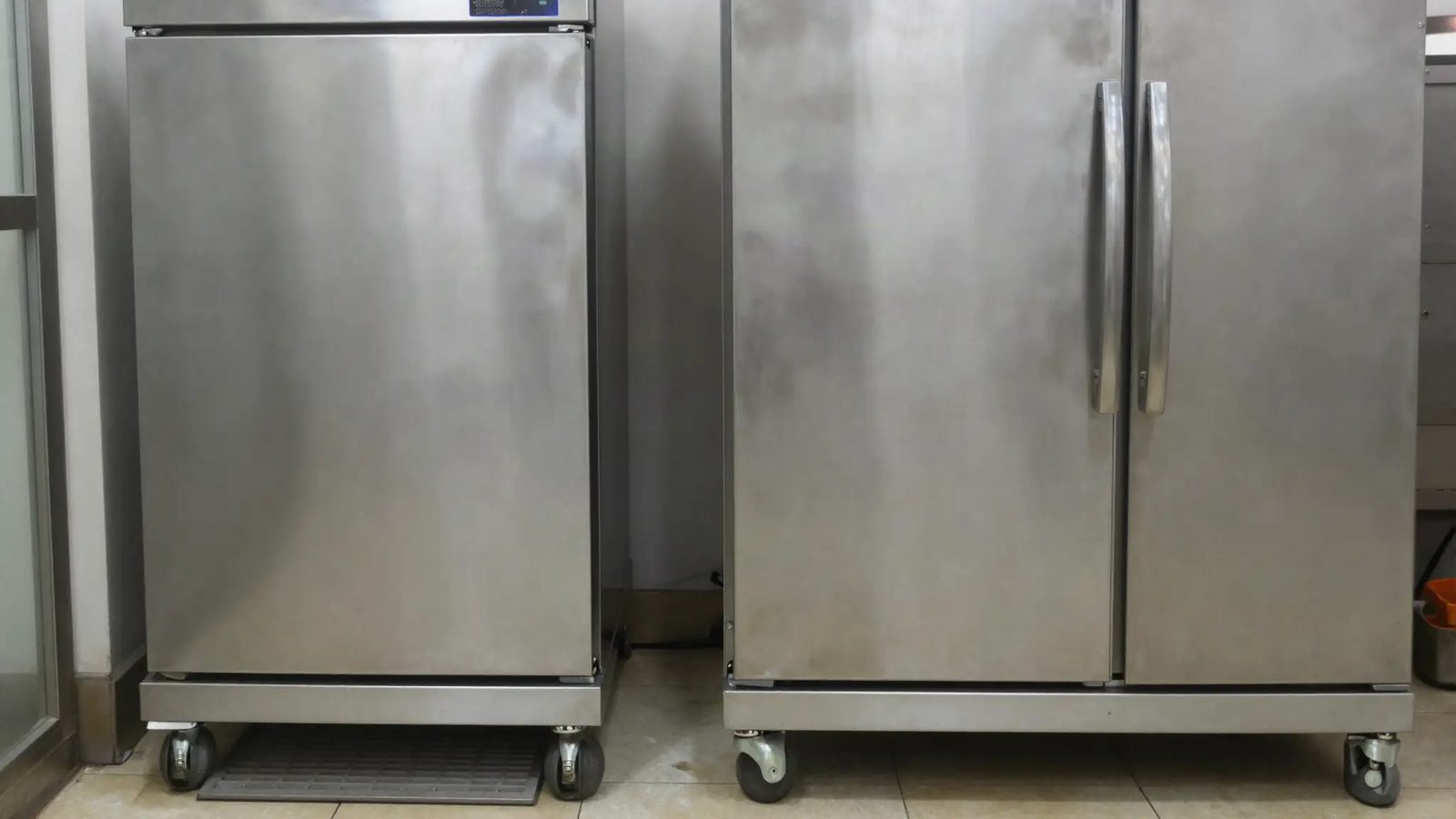
| Is stock or safety at risk? | A failing walk-in outranks almost everything |
| Is there a contracted commitment? | A response window you agreed to and can be measured on |
The first is the question that does the work. "How urgent is it" invites an opinion, and "what stops if we come tomorrow" produces a fact.
Redundancy is the fastest disqualifier
And almost nobody asks about it.
A kitchen with three fryers losing one is inconvenienced. A kitchen with one fryer losing it has a menu problem tonight. Both calls are described the same way.
The same applies to refrigeration, ice machines and warewashers. What matters is whether the site can continue trading in a reduced form, and the caller knows the answer immediately.
Which makes it a question worth asking every time, and worth recording against the site so the next call about that equipment is already ranked.
Roopairs holds equipment asset records per site, so what is at a site and what depends on it can be recorded once rather than established during every emergency.
Refrigeration outranks nearly everything
Because the loss compounds while you decide.
A cooking appliance out of service costs sales during the services it misses. A walk-in drifting out of range costs the stock inside it, and that loss grows for every hour nobody attends.
So the rule worth writing down is that a refrigeration failure with product at risk goes to the top, ahead of a busier site with a cooking fault.
The exception is where the operator can move the stock. That is one question on the phone, and it converts a first-priority call into a second-priority one legitimately.
Contracted commitments are not the same as priority
A distinction that causes real friction when it is muddled.
A contracted response window is a promise with a clock attached. It has to be met whether or not that call is the most severe of the morning.
Which means it is a constraint on the schedule rather than a rank in it. Contracted calls get their window protected, and everything else is ranked on the four questions inside the remaining capacity.
Where the two collide, meaning a contracted commitment and a genuinely worse failure elsewhere, that is a decision and not a rule. Somebody has to make it and somebody has to tell the customer who waits.
What to tell the customer who comes second
Which is the part of this that is usually skipped.
A restaurant told "we will get to you as soon as we can" hears nothing and calls again in an hour, which consumes the dispatcher who is trying to solve the day.
A restaurant told "we cannot be there before four and I will call you at two if that changes" has information. Most operators plan around a specific answer and none can plan around a vague one.
And where you genuinely cannot attend today, say so. A customer told that at ten can call somebody else, and a customer told at five has lost their evening waiting.
That conversation costs relationships far less than the alternative, which is arriving late to somebody who canceled other arrangements.
3 things that keep the board workable
- Protect one slot a day, unassigned, for the call that will arrive at eleven
- Record the rank and the reason, so the day can be reviewed rather than argued about
- Let one person own the board, because a board with two owners is two boards
The first is the one that fails first under pressure. A fully committed board at nine has no capacity for the genuine emergency at eleven, and every emergency after that displaces somebody who was promised a time.
Review the week rather than the day
Because the pattern is where the fix is.
Which calls were ranked urgent and turned out not to be. Which customers describe everything as an emergency. Which sites generate repeated calls that a planned visit would have prevented.
All three are visible over a week and invisible on any single morning.
The third is the most valuable. A site producing frequent reactive calls is a site with an equipment problem or a maintenance gap, and it is a commercial conversation rather than a dispatch one.
The second is worth acting on gently. A customer who describes everything as an emergency is usually reacting to having been deprioritized before, and the fix is a reliable answer about timing rather than a conversation about their tone.
The pain starts around your third or fourth technician, which is where the dispatcher no longer knows every site personally and the ranking has to come from questions rather than from memory.
Roopairs runs a product tour where you can see per-site equipment records and the job history behind each call.
What service companies in the trade say
“It has streamlined our business giving us more control of our jobs and better information access.” — Jason Hertel
Also worth reading
- Dispatch Software for Kitchen Service Companies
- After-Hours Coverage Without Burning People Out
- The future of IoT for commercial kitchen repair companies
Frequently asked questions
How do you rank calls when every one is urgent?
With four questions: what stops if nobody attends today, is there a redundant unit, is stock or safety at risk, and is there a contracted commitment. The first replaces an opinion with a fact.
What is the fastest disqualifier?
Redundancy. A kitchen with three fryers losing one is inconvenienced, and a kitchen with one fryer has a menu problem tonight. Both calls are described identically and the caller knows the answer instantly.
Why does refrigeration outrank most things?
Because the loss compounds while you decide. A cooking fault costs sales during the services it misses, and a failing walk-in costs the stock inside it, growing every hour.
Are contracted customers automatically first?
No. A response window is a constraint on the schedule rather than a rank within it. Protect the window, then rank everything else on the four questions inside the remaining capacity.
What should you tell the customer who waits?
A specific time and a specific update. "As soon as we can" produces another call in an hour, and an honest "not before four" lets an operator plan or call somebody else.
What keeps a board workable?
One unassigned slot a day for the call that arrives at eleven, a recorded rank and reason so the day can be reviewed, and a single owner, because a board with two owners is two boards.
See how Roopairs can help your service business scale
The all-in-one platform built for commercial kitchen service companies. Dispatch, invoicing, parts ordering — all in one place.
Book a product tour →