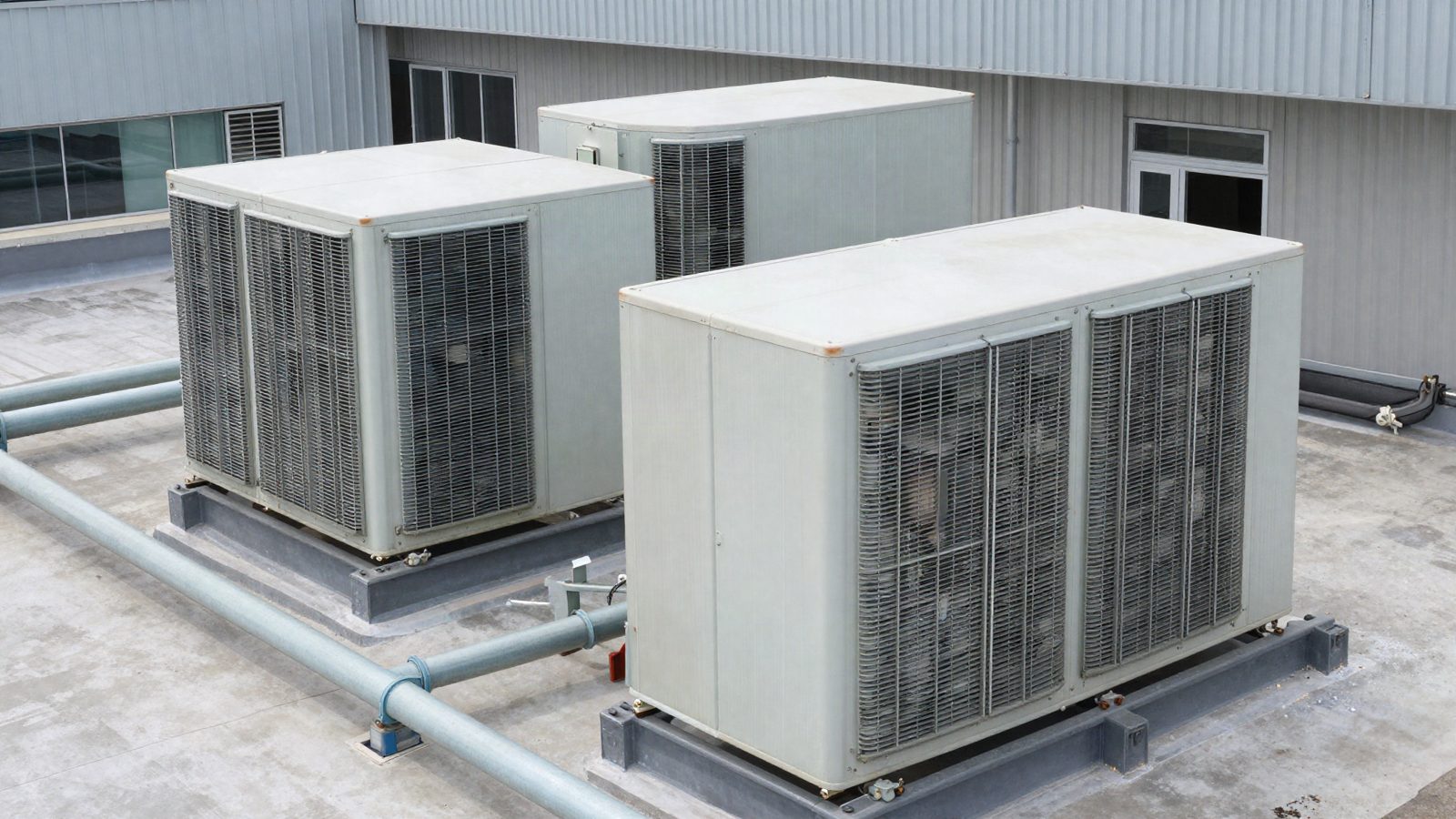
CO2 crosses its critical point at 87.8F, around 1,055 psig, so above roughly 75F ambient the system runs transcritical and discharge pressure can approach 1,400 psi on a hot day. The triple point at -69.8F and 60.4 psi is the other number that matters, because liquid charging below it makes dry ice.
The short version
CO2, as a refrigerant called R-744, is not a new HFC with a different number on the cylinder. It behaves differently enough that the pressures, the charging procedure and the failure modes all change.
It is already in supermarkets, and it is arriving in larger institutional kitchens and in equipment attached to them. A service company working on commercial refrigeration will meet it before it expects to, usually on a site it already covers.
Three properties explain almost everything a technician needs to adjust to. A low critical point, very high working pressures, and a triple point high enough that dry ice is a real possibility during service.
None of that makes it exotic. It makes it a system where the manufacturer's procedure matters more than habit.
Why is CO2 appearing in commercial refrigeration?
Because the refrigerant itself has a global warming potential of 1 and is not subject to the phase-down pressure that is reshaping HFC equipment. It is also non-flammable, which distinguishes it from the A2L blends arriving in other new equipment.
That combination makes it the long-horizon choice for operators buying systems they expect to run for 15 years, which is why it showed up first in supermarket racks where the capital decision is made centrally.
The practical consequence for a kitchen service company is secondhand but real. The same sites that run a CO2 rack also run coolers, prep tables and ice equipment, and a provider who cannot touch the rack gets a narrower scope on that site.
What makes a CO2 system different from an HFC system?
Five differences, and each one shows up in a different part of the job.
| Property | What it means on site |
|---|---|
| Critical point at 87.8F | On a warm day there is no condensing. The high side rejects heat without changing phase, which is why the component is a gas cooler and not a condenser |
| Very high pressures | Gauges, hoses, recovery equipment and relief settings all have to be rated for the system, not adapted to it |
| Triple point at -69.8F and 60.4 psi | Below that point CO2 becomes a solid, so an empty or vented system is charged with vapor first |
| Two operating modes | Subcritical in cool weather and transcritical in warm weather, with a high pressure control valve managing the transition |
| Non-flammable but heavier than air | A leak in a compressor room or a walk-in is an asphyxiation hazard rather than a fire hazard, which is why fixed CO2 detection is part of the installation |
The first row is the one that reframes the diagnosis. Superheat and subcooling are still the language on the low side, and subcooling has no meaning above the critical point because there is no saturated liquid to subcool. The reading that replaces it is gas cooler outlet temperature against the controlled pressure. The general method is in superheat and subcooling, and the part that transfers is the discipline rather than the target numbers.
What pressures does a technician actually meet?
Higher than anything in a kitchen HFC system, and the difference is large enough that it changes equipment rather than technique.
- Discharge in transcritical operation: approaching 1,400 psi on a 95 to 100F day, with a high pressure valve dropping it to roughly 550 psi downstream
- Medium temperature evaporators: in the region of 425 psi
- Low temperature evaporators: in the region of 200 psi
- Transition point: above roughly 75F ambient the system moves into transcritical operation, and in warm climates it can stay there for long periods
Those figures are typical rather than universal, and the manufacturer's service data for the unit is the reference. The reason to know the order of magnitude is simpler: a manifold rated for an HFC kitchen system has no business on this equipment.
What is the dry ice problem when charging?
CO2 has no liquid phase below its triple point, so a system that has been opened or vented sits at a pressure where introducing liquid produces solid CO2 instead.
Dry ice in the circuit blocks flow, and it does not clear quickly. The standard precaution is to charge with vapor until the system is above the triple point, with manufacturers commonly specifying vapor charging until at least around 100 psig before liquid is introduced.
Two habits from HFC work that cause trouble here:
- Reaching for liquid charging to save time, which is normal practice on a system that has a liquid phase at atmospheric conditions and is a mistake on this one
- Venting to atmosphere as a quick way to drop pressure, which takes the system straight to the condition where the next step creates the problem
Sources differ on whether the triple point figure is quoted as psi or psig, which matters when a technician is working near the limit. That is a good reason to take the number from the service manual for the unit rather than from memory.
What happens when the system sits without power?
Pressure rises, because the refrigerant warms to ambient and CO2 at room temperature is well above the pressures an idle HFC system reaches.
Systems are designed for this, with relief arrangements and in many cases a small auxiliary unit that keeps the receiver cool during a power outage. What the service company has to know is the site procedure, because a long outage on a hot day is a pressure event rather than a product loss event.
The question to ask at the first visit, before it is needed at 2am: what happens on this site when the power goes out, and who is called.
What has to change on the van and in the crew?
The equipment list first, because none of it is optional.
- Gauges and hoses rated for the system pressures, kept separate from the HFC set
- Recovery equipment suitable for the refrigerant and the pressures
- CO2 detection for personal safety in enclosed spaces, which a halogen leak detector does not provide
- Manufacturer training, since the controller and the high pressure valve logic differ between makers
- The service manual for the specific unit, on site rather than at the office
Then the crew question, which is a scheduling problem rather than a training problem. If one technician holds the CO2 capability, every call on that equipment is a constraint on one person, and the dispatch board has to know which technician can take which site.
Certification itself sits in the same federal framework as other refrigerants, and what has to be on file for each technician is in EPA 608 and refrigerant handling.
Where does this leave a kitchen service company?
Most commercial kitchens are not on CO2 and will not be soon. The equipment that reaches a kitchen service company is at the edges: a grocery account with a rack, an institutional site with a central plant, a new build specified by a consultant who was planning for 2035.
Which makes the realistic position neither ignoring it nor retooling for it.
- Record the refrigerant on every equipment record, so the installed base answers the question instead of a guess
- Know which of your sites already has CO2, including equipment you do not currently service
- Decide deliberately whether to build the capability or to refer it, and tell the customer which it is
- Train more than one technician if the answer is to build it, otherwise the capability is a single point of failure
The first point is the cheapest and the one most companies skip. Refrigerant type per unit is a field on an equipment record, and it turns a strategic question into a report.
Roopairs runs a product tour where you can see equipment records per asset, refrigerant and nameplate detail, and service history in one place.
What service companies in the trade say
“Everything about the product is cutting edge and specifically tailored to the food service equipment repair industry.” — Jeff Victory
Also worth reading
- Commercial Refrigeration: How the Systems Work
- EPA 608 and Refrigerant Handling
- Superheat and Subcooling: Reading the System
Frequently asked questions
What pressure does a CO2 refrigeration system run at?
Much higher than an HFC kitchen system. In transcritical operation discharge pressure can approach 1,400 psi on a 95 to 100F day, with a high pressure valve dropping it to roughly 550 psi. Medium temperature evaporators run near 425 psi and low temperature near 200 psi.
What does transcritical mean?
That the high side is operating above the critical point of the refrigerant, which for CO2 is 87.8F at about 1,055 psig. Above that there is no condensing and no saturated liquid, so heat is rejected through a gas cooler and subcooling has no meaning on that side.
Why does CO2 turn into dry ice during service?
Because its triple point is at -69.8F and 60.4 psi, and below that pressure there is no liquid phase. Introducing liquid into a system that has been vented or opened produces solid CO2, which blocks flow. Vapor charging until the system is above the triple point avoids it.
Is CO2 dangerous to work with?
It is non-flammable, which is a difference from the A2L refrigerants in other new equipment, and it is heavier than air. A leak in a compressor room, a walk-in or any enclosed space is an asphyxiation hazard, which is why fixed CO2 detection is part of these installations and personal detection belongs on the van.
Can HFC gauges be used on a CO2 system?
No. Gauges, hoses and recovery equipment have to be rated for the pressures the system runs at, and a manifold intended for a kitchen HFC system is not. The CO2 set is kept separate from the HFC set for that reason.
Should a kitchen service company learn CO2 now?
It depends on the installed base, which is why recording refrigerant type per unit comes first. Companies with grocery, institutional or new-build accounts meet it soonest. The decision worth making deliberately is whether to build the capability across more than one technician or to refer the work and say so.
See how Roopairs can help your service business scale
The all-in-one platform built for commercial kitchen service companies. Dispatch, invoicing, parts ordering — all in one place.
Book a product tour →