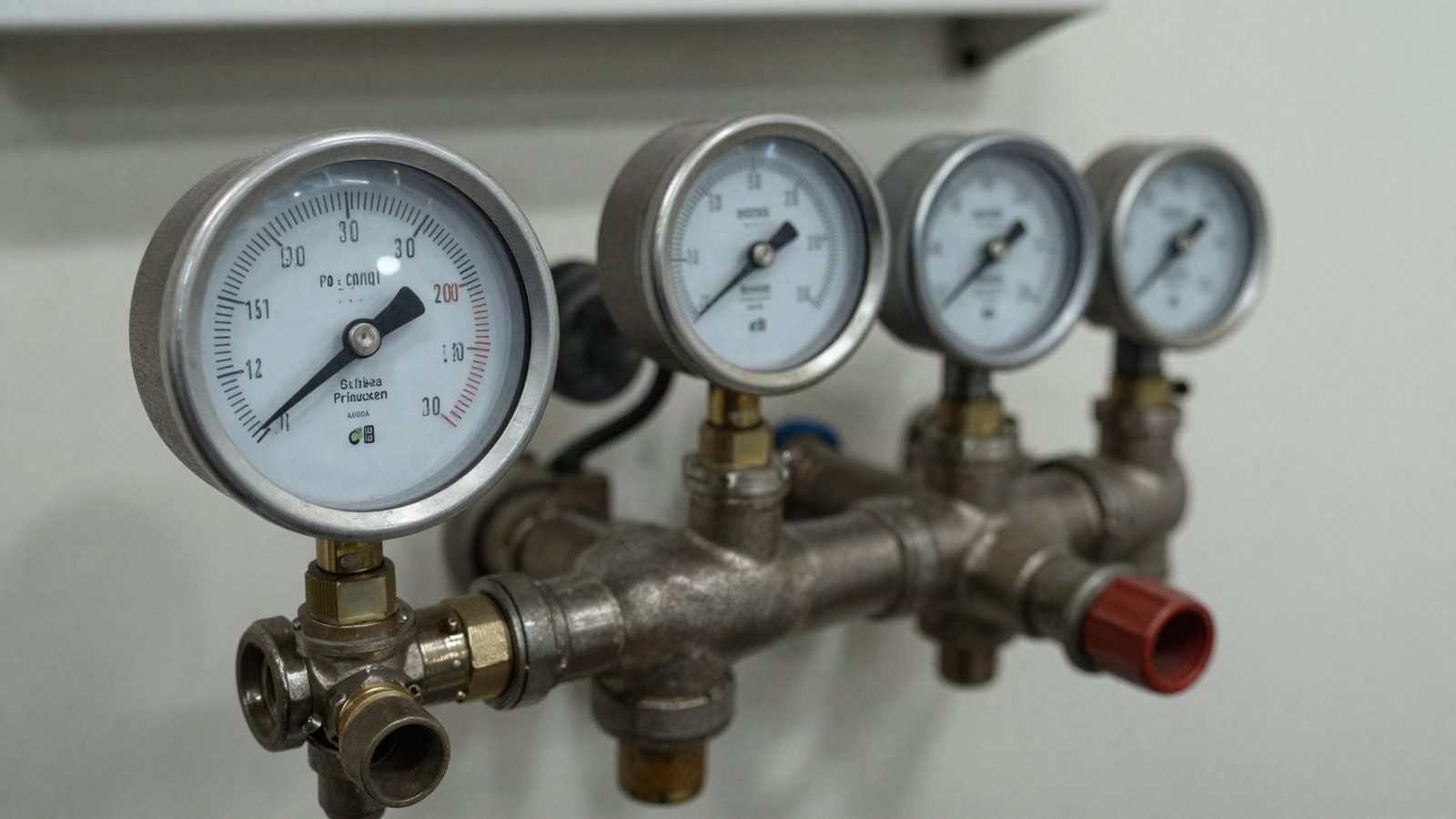
A commercial HVAC maintenance checklist covers 8 areas on every unit: cabinet and airflow, belts and blower, coils, the refrigerant circuit, electrical, controls, condensate, and gas heat or makeup air where fitted. Most commercial units on a PM contract get 4 visits a year, and the spring and fall visits double as cooling and heating startups.
Key takeaways
- Organize by component first, then decide how deep each visit goes.
- Spring is the cooling startup, fall is the heating startup. Quarterly visits cover filters, belts, drains and coils.
- Restaurants add makeup air interlocks and grease from exhaust fans landing on rooftop coils.
- Record the same readings on the same unit every visit, keyed to the serial number.
- Filters and belts are parts, so the checklist is also the truck stock plan.
How should a commercial HVAC maintenance checklist be organized?
By component first, by visit second. A technician on a roof with six rooftop units does not work through a season. They work through a unit, panel by panel, and the checklist should follow the same path around the cabinet.
The visit decides how deep each component goes. A quarterly stop might be filters, belts, condensate and a look at the coils. The spring startup on the same unit adds refrigerant readings, amp draws and a coil cleaning.
And one sheet per unit, never per building. A grocery store with nine rooftop units has nine histories, and a combined sheet cannot tell you which one has been losing charge since summer.
What does a rooftop unit maintenance visit cover?
A rooftop packaged unit carries the whole system in one cabinet, so the rooftop unit maintenance list is the longest one. Work it in this order, with power isolated and locked out before any panel with live parts comes off.
| Component | What to check | What to note |
|---|---|---|
| Cabinet and curb | Panels and screws in place, gaskets sealed, curb flashing intact, no standing water or debris around the unit | Roof damage or missing panels, with photos |
| Filters | Replace, check the rack seals so air cannot bypass, confirm the correct size | Size, count and how loaded the old ones were |
| Blower section | Belt wear and tension to the manufacturer's spec, pulley alignment, set screws, bearing noise and play, wheel clean | Belt size, whether replaced, blower motor amps |
| Evaporator coil | Face clean, fins straight, no oil stains at joints | Condition, and whether it needs a separate cleaning |
| Condenser section | Coil clean, fan blade secure, fan motor amps, nothing blocking discharge air | Coil condition, cleaned or not |
| Economizer | Damper strokes fully, linkage free, minimum position set, controller and sensors respond | Working or stuck, and in which position |
| Gas heat section | Burners, ignition, flame sensor, inducer, flue, heat exchanger (covered in the fall startup) | See the fall column below |
The coil row is the task most often skipped when a visit runs long. The kitchen equipment side of the trade has the same pattern, and the fix is the same: planned maintenance tracked per piece of equipment.
How does the checklist change for split systems?
A split system puts half the checklist above a ceiling and half on a pad or a roof, so the list splits with it. The outdoor condensing unit gets the condenser rows from the rooftop table. The indoor half is where the surprises are.
| Indoor component | What to check |
|---|---|
| Air handler or fan coil | Filter, blower wheel, motor amps, evaporator coil face |
| Secondary drain pan | Dry and clean. Water in the secondary pan means the primary drain is failing |
| Condensate pump | Runs on a water test, check valve holds, discharge line clear |
| Ductless cassettes and wall units | Filters washed, coil and blower wheel clean, drain clear, louvers move |
| Line set | Suction line insulation intact, no oil at joints or flare nuts |
In a restaurant, a ductless head near the cooking line collects grease on the blower wheel faster than anything in the dining room. Note which heads sit in kitchen air, because they need cleaning on their own rhythm.
What changes in a restaurant with makeup air and kitchen exhaust?
The building has to be checked as one air system, not as separate units. A hood exhaust fan pulls a lot of air out of a kitchen, and the makeup air unit is there to put it back. When the two stop matching, the symptoms land on the HVAC contractor even when the cause is the exhaust side.
| Check | Why it matters |
|---|---|
| Makeup air starts when the hood exhaust starts | A broken interlock leaves the kitchen running negative, and the rooftop units fight it |
| Makeup air filters, belts and burner section | Same blower and heat checks as a rooftop unit, to the makeup air manufacturer's procedure |
| Signs of negative pressure | Front doors that pull hard or slam, drafts across the line, smoke rolling out of the hood |
| Grease around exhaust fans on the roof | Discharge from the fans settles on nearby condenser coils and outdoor air intakes |
Hood and duct cleaning is usually a separate contractor. The HVAC technician records what the roof looks like and tells the customer, with a photo.
Which checks apply to every unit, whatever the type?
Electrical, controls, the refrigerant circuit and condensate are the same on every unit type.
Electrical
- Disconnect in good condition and labeled for the unit it feeds
- Terminal connections checked and tightened with power off, and any heat discoloration noted
- Contactor points inspected for pitting
- Run and start capacitors tested against the rating printed on them
- Voltage at the unit under load, on each phase for three-phase equipment
- Compressor, condenser fan and blower amps compared to the nameplate
Controls and thermostats
- Setpoints and occupied schedules match the customer's actual hours, which change with the season for schools and restaurants
- Space sensor reading compared to a reference thermometer
- Active and stored fault codes read and written down before they are cleared
- Communication with the building automation system, where there is one
Refrigerant circuit
- Suction and discharge pressures, superheat and subcooling, read against the manufacturer's charging chart
- Oil stains at joints, valves and service ports as a leak sign
- Service port caps back on and tight
- Any refrigerant added or recovered, by type and quantity
Only a certified technician adds refrigerant, and the quantities belong on the unit record. The rules behind that are in EPA 608 and refrigerant handling for technicians, and the readings themselves in reading a system with superheat and subcooling.
Condensate
- Drain pan clean, no rust through, no standing water
- Drain line and trap clear and primed, proven with a water test
- Float or overflow switch trips the unit when lifted
- Ceiling tiles below indoor units checked for stains
What gets done on each visit: quarterly, spring and fall?
Every visit gets the quarterly list, and the two seasonal startups add their own section on top. That is the HVAC preventative maintenance checklist template most commercial contracts end up running, whatever the paperwork calls it.
| Quarterly, every visit | Spring cooling startup, adds | Fall heating startup, adds |
|---|---|---|
| Replace filters | Clean condenser coil, evaporator coil as needed | Inspect and clean burners |
| Belts, pulleys, bearings | Pressures, superheat, subcooling | Ignition sequence, flame sensor, inducer motor |
| Condensate pan, drain, switch | Compressor and condenser fan amps | Manifold gas pressure against the nameplate |
| Visual check of coils and cabinet | Capacitors and contactors | Temperature rise within the nameplate range |
| Thermostat and schedule | Supply and return temperatures in cooling | Heat exchanger inspected for cracks and corrosion |
| Leak signs at joints | Economizer free cooling operation | Flue clear, combustion and CO readings per company procedure |
| Roof around the unit | Condensate flow proven under load | High limit and rollout switches tested, economizer closes tight |
Heat pumps add reversing valve and defrost checks in the fall. Electric heat adds amp draws on each stage of strips. Units with water coils need freeze protection confirmed before the first cold night, not after.
What should a technician record on every visit for every unit?
The same readings, on the same unit, every visit, so the next technician can compare instead of guess. A single reading tells you whether a unit is running today. Four readings in a row tell you which way it is heading.
| Record | Why it matters next time |
|---|---|
| Unit ID and position on the roof or in the building | The next technician finds RTU 4 without asking the manager |
| Manufacturer, model and serial number | Parts lookup, warranty status, age of the unit |
| Refrigerant type | The right cylinder is on the van before the leak call |
| Filter size and count, belt size | The PM route is loaded the night before, not at the supply house |
| Pressures, superheat, subcooling | A slow leak shows as a trend long before a no-cool call |
| Amps on compressor and motors, voltage | A climbing amp draw is a failing component you can quote now |
| Supply and return temperatures | Compared to last visit, not to a rule of thumb |
| Gas pressure and temperature rise | Heat section changes show between fall startups |
| Refrigerant added or recovered | The running total per unit is what leak questions are asked about |
| Deficiencies, with photos, and recommendations | The basis for the repair quote and for the customer's capital plan |
None of this works in a binder at the office or a notes box that says "PM done, all good". The readings belong on the equipment record, so whoever climbs the ladder next quarter sees last quarter's numbers before opening a panel.
That is how Roopairs organizes the work. Equipment records track manufacturer, model, serial, service history, location history and warranty agreements with partner manufacturers, and planned maintenance contracts are held against the equipment record. Technicians see service history on their phone or tablet and record their work summary on the job.
Why the checklist is also a parts plan
Every PM stop consumes filters and often a belt, so the checklist decides what has to be on the van. Take a hypothetical customer with 12 rooftop units across three stores. If each unit's filter and belt sizes are on its record, the route is loaded from the parts room the day before. If not, the technician measures on the roof and drives to a supplier, and on a multi-site route that costs the next stop too.
Roopairs ties that side together as well: inventory with minimum and maximum threshold alerts, purchase orders to third-party vendors attached to work orders, and estimates that convert into jobs and invoices when a PM visit turns up a repair the customer approves.
Roopairs runs a product tour where you can see equipment records with service history, planned maintenance contracts, parts inventory and purchase orders in one place.
What service companies in the trade say
“My favourite thing about Roopairs is the equipment tracking. Being able to have the history at the spur of the moment when the customer requests it. The old school version would be me flipping through my day minder going, when were you there last and worked on the bar cooler. With Roopairs I can just pull open the equipment, type in the serial number, and the repair history is there. Flawless.” — ProTemp Solutions (NC)
Frequently asked questions
How often should filters be changed on commercial rooftop units?
At every quarterly visit as a baseline, and more often wherever the recorded filter condition says so. Units near kitchen exhaust or in dusty locations load faster. Writing down how loaded each old filter was lets you set the interval per unit.
Is there an HVAC preventative maintenance checklist template I can use?
The visit table above works as one: a quarterly column every visit, plus a spring and a fall section. Keep one sheet per unit, keyed to the serial number, and include fields for the readings so they can be compared visit to visit rather than ticked off.
What is the difference between a startup and a regular PM visit?
A startup prepares a unit for the season it is about to work in. The spring visit proves the cooling side under load and the fall visit proves the heat section and its safeties. A regular quarterly visit keeps filters, belts, drains and coils in order between them.
Should technicians fix problems they find during a PM visit?
Small items inside the contract scope, yes, on the spot. Anything that needs a part or extra labor is better documented with photos and readings and sent as an estimate, so the customer approves it before the work and the PM visit stays on schedule.
What should a technician do when a reading looks off but the unit is running?
Compare it to the last recorded reading on the same unit before deciding anything. A value that has drifted steadily over three visits is a developing fault worth quoting. A one-off value that matches nothing else may be the conditions on the day, and is worth rechecking next visit.
See how Roopairs can help your service business scale
The all-in-one platform built for commercial kitchen service companies. Dispatch, invoicing, parts ordering — all in one place.
Book a product tour →