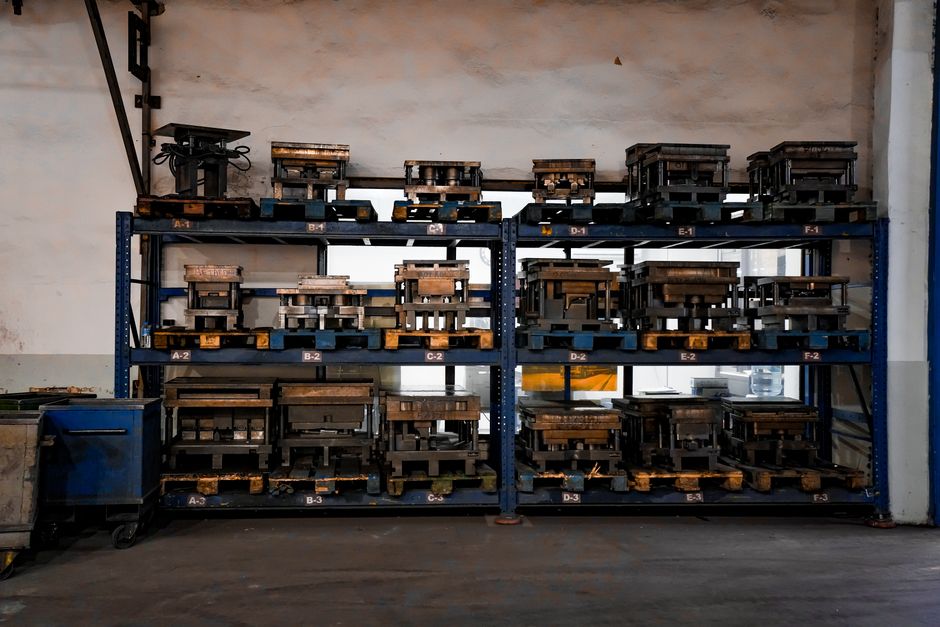
A part on a shelf can be in 4 states: your stock, a manufacturer's part awaiting fitting, a defective unit awaiting return, or a claimed part awaiting reimbursement. They look identical, and mixing them costs you claims, stock accuracy and margin at the same time.
The short version
Parts inventory in a service business is a solved discipline until warranty work arrives. Then a second stream of components enters the workshop that you did not buy, do not own, and cannot count as stock.
Nobody plans for this. It arrives one compressor at a time, and eighteen months later there is a shelf of items with unknown ownership, some of which belong to claims and some of which are worth money to somebody.
The fix is not complicated. It is a physical separation and a rule about what happens to each state, applied before the shelf exists.
The 4 states, and what each one needs
| State | Who owns it | What it needs |
|---|---|---|
| Your stock | You | Counted, valued, consumed against jobs |
| Manufacturer-supplied, awaiting fitting | Them | Job attached, not counted as stock, not valued |
| Defective unit awaiting return | Them | Labeled with the claim, shipped before the deadline |
| Your part fitted, reimbursement pending | You, until paid | Tracked as a receivable, not as inventory |
Row two is the one that corrupts stock figures. A manufacturer-supplied part counted as inventory inflates your stock value with something you never paid for and cannot sell.
Row four is the one that corrupts margin. A part you bought and fitted under warranty has left your stock and has not produced revenue yet, and if it is treated as a normal consumption the job shows a loss that is actually a pending claim.
A separate shelf fixes most of this before any system does
Before any system change, give warranty parts their own space.
A labeled shelf or bin, separate from stock, with three sections: awaiting fitting, awaiting return, and returned. That is the entire physical requirement and it prevents most of the losses.
What goes on the label, per item, and it takes a marker pen: the job number, the equipment, the claim reference, and the date. An unlabeled component becomes unidentifiable within about two weeks, and a defective part nobody can identify is a claim that fails on a technicality.
The same applies in the van. A manufacturer-supplied part traveling with a technician is not van stock, and it needs to be distinguishable from the parts that are.
Returns need a deadline and an owner
The most expensive failure in this whole area, and it is administrative rather than technical.
Many claims require the failed component returned within a window. Miss it and the claim is refused, regardless of how good the documentation was.
Three things make returns work:
- The technician brings it back rather than leaving it on site, which requires telling them the job is a warranty job before they go
- It is labeled on arrival, not later, because later does not happen
- One person owns the shelf and checks it weekly against open claims
That weekly check is what catches the deadline. A shelf that nobody reviews is a shelf where claims expire quietly, and the loss never appears as a line anywhere.
The ledger only carries parts you paid for
The accounting side, and it decides whether your job costing means anything.
When you supply the part and claim reimbursement, the part leaves your inventory at your cost and the reimbursement is a receivable. Both halves have to be recorded, or the job shows a cost with no revenue and your parts margin looks worse than it is.
When the manufacturer supplies the part, no purchase order exists, no cost enters the job, and the part must not touch your stock valuation. The job should still record which part was fitted, with its number, because the equipment history needs it even though the cost does not.
The distinction to hold: the equipment record always wants to know what was fitted. The inventory and the ledger only want to know about parts you paid for.
Roopairs holds parts inventory alongside purchase orders attached to work orders, which is what keeps a part you bought and a part somebody sent you from ending up in the same number.
The stock count is where the damage becomes visible
Service companies usually discover this problem during a count, and by then it is a year old.
The symptoms are consistent: physical stock exceeding the system figure, components nobody can price, and a discrepancy that gets written off because reconstructing it is impossible.
What that write-off actually contains, in most cases, is manufacturer property counted as yours, defective returns never shipped, and parts fitted under warranty that were never claimed.
Which makes the annual count a useful audit rather than only a chore. Sort the warranty shelf before counting, and what remains unexplained is a specific list of process failures rather than a number.
3 rules hold the whole thing together
Small, and they hold if they are actually applied.
- Warranty parts never enter stock. Separate space, separate label, no exceptions for convenience
- Every warranty part carries its job. Physically on the label and logically on the record
- Returns are checked weekly by a named person against the open claims list
The first rule is the one that gets broken, always for a good reason at the time. A part gets put on the nearest shelf during a busy week, and it is indistinguishable from stock within a month.
Reviewing that once a quarter takes twenty minutes and is worth substantially more than that on any service company doing regular warranty work.
Roopairs runs a product tour where you can see parts inventory, purchase orders and the jobs they were consumed against.
What service companies in the trade say
“My favourite thing about Roopairs by far is the calendar. I have 15,000 moving parts and that calendar helps me keep track of all of them. Equipment, customers, multiple locations for parent accounts, prices.” — ProTemp Solutions (NC)
Also worth reading
- A Parts Room for a Small Service Company
- How a Kitchen Repair Job Consumes Inventory
- The achilles heel of warranty service
Frequently asked questions
Why keep warranty parts separate from your own stock?
Because they are in different states of ownership. Manufacturer-supplied parts inflate your stock value with something you never paid for, and parts you fitted under warranty have left stock without producing revenue yet. Mixing them corrupts stock accuracy and job costing at once.
What are the four states a part can be in?
Your stock, a manufacturer-supplied part awaiting fitting, a defective unit awaiting return, and a part you supplied with reimbursement pending. Only the first belongs in your inventory valuation, and the last belongs in receivables.
What should a warranty part be labeled with?
The job number, the equipment, the claim reference and the date, written when it arrives rather than later. An unlabeled component becomes unidentifiable within about two weeks, and an unidentifiable defective part means a refused claim.
Why do defective returns get missed?
Because nobody owns the shelf. Many claims require the failed part returned within a window, and a shelf that is never reviewed is where claims expire quietly. A weekly check against open claims by a named person is what catches it.
Should the job record a part the manufacturer supplied?
Yes, with its number, because the equipment history needs to know what was fitted. It should not carry a cost or touch your stock valuation, since you did not buy it. The record and the ledger want different things here.
How does this show up in a stock count?
As physical stock exceeding the system figure and components nobody can price, usually written off because it cannot be reconstructed. That write-off is typically manufacturer property counted as yours, returns never shipped, and warranty parts never claimed.
See how Roopairs can help your service business scale
The all-in-one platform built for commercial kitchen service companies. Dispatch, invoicing, parts ordering — all in one place.
Book a product tour →