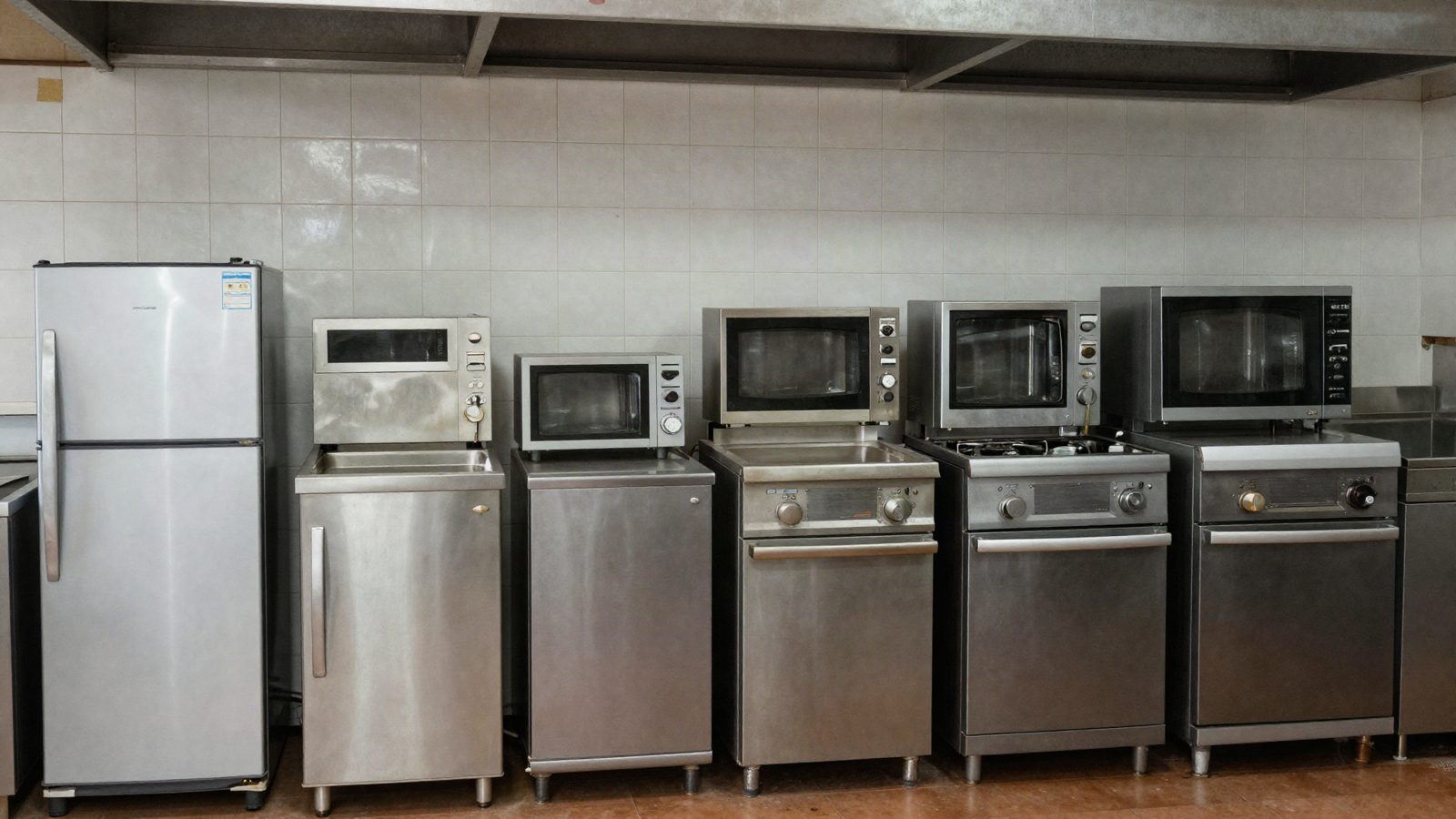
A dealer appoints a service provider to protect its own relationship with the restaurant, not to buy labor hours. 5 reasons end that appointment, 4 of them are about response and paperwork rather than rate, and every one of the 5 is visible in the dealer's own records months before the call comes.
The short version
When an equipment dealer sells a fryer, the warranty obligation stays with the manufacturer and the phone call lands with the dealer. Whoever the dealer sends to that call is standing in front of the dealer's customer wearing the dealer's reputation.
That is the whole frame. A dealer is not buying repairs. The dealer is buying the certainty that a kitchen it sold to will be running tomorrow, and that the claim behind it will clear without a month of correspondence.
Service companies lose this work for reasons that look administrative from the inside and look personal from the dealer's side of the desk.
What a dealer is actually buying
Three obligations sit on a dealer the day the equipment ships, and the service provider either absorbs them or hands them back.
- A response the dealer promised: the sales conversation included a service commitment, whether or not anybody wrote it down
- A claim that will be paid: labor and parts recovered from the manufacturer at the manufacturer's rate, with the documentation that manufacturer requires
- A customer who stays a customer: the next piece of equipment is sold or lost in the first year of owning this one
A service company that treats warranty work as low-rate filler is answering only the first obligation, and dealers can tell within a quarter.
The 5 reasons the relationship ends
| Reason | What the dealer experiences | What it looks like from the service company |
|---|---|---|
| Response time on a unit under warranty | The customer calls the dealer to ask where the technician is | A warranty job scheduled behind billable work |
| Claims coming back | Rejections to chase, credits that never arrive | Missing serial, missing failure code, missing photo at closeout |
| Second visits | The same unit down twice in a month | The part was not on the van and nobody checked coverage first |
| Silence | No status until the invoice | Updates live in a technician's head |
| Rate | The quoted labor rate against the manufacturer's allowance | The gap between what the work costs and what the claim pays |
Rate is last on that list for a reason. It is the only one a dealer can raise in a meeting without it sounding like a complaint about competence, which is why it is the reason given and rarely the reason behind it.
Does the trade segment change the answer?
The segments ask the same question with different clocks.
| Dealer segment | What makes it different | What the provider has to prove |
|---|---|---|
| Restaurant equipment | Single sites, owner on the phone, service hours matter | Same-day response and a clean closeout |
| Grocery | Refrigeration load, stock at risk, store managers with escalation paths | Night and weekend coverage, refrigerant records |
| Bakery | Production windows, ovens and proofers that run early | Work before the bake, not during it |
| Convenience stores | Many small sites, thin margins, remote ownership | Predictable cost per visit and a portal the chain can see |
The differences are scheduling and reporting. They are not different reasons to switch, which is why a provider who fixes response and documentation keeps dealers across all 4.
What the manufacturer sees
The third party in the room never attends the meeting. A manufacturer watches claim quality per servicer: how many claims clear first time, how long between the visit and the claim, how often a part is replaced that the failure code does not support.
A dealer hears about that indirectly, through its own rejected claims and through the manufacturer's willingness to keep a servicer on the approved list. A service company with a clean claim record is easier for a dealer to defend internally, and that is often what keeps the appointment during a bad quarter.
What switching costs the dealer
Dealers do not change providers casually, and understanding the friction is how an incumbent keeps the work.
- Equipment history sits with the outgoing provider and rarely transfers in usable form
- Open claims have to be finished by whoever filed them
- The new provider needs manufacturer authorization for the brands involved
- Response quality is unproven until the first emergency, which is a bad time to find out
That friction is the incumbent's asset. It buys time to fix a response problem, and it disappears the moment a dealer concludes the problem is structural.
What a service company can show to win the work
Dealers ask for references and get adjectives. The providers that win bring records instead.
- Coverage checked before dispatch: the technician knows the unit is under warranty before leaving, not after the invoice is queried
- Serial, model and failure code captured on the job: the fields the claim needs, taken while the equipment is open
- First-time-fix on warranty calls, measured separately: warranty work has its own parts problem and deserves its own number
- Status the dealer can see without phoning: accepted, scheduled, on site, complete
- Claim aging: what is filed, what is pending, what came back and why
Every item there is a record about a piece of equipment rather than a promise about a company. That is the difference between a pitch and an audit trail, and it is the whole argument.
Roopairs runs a product tour where you can see equipment records with warranty agreements, job documentation and the parts chain behind a claim in one place.
What service companies in the trade say
“Ease of use and on onboarding process is seamless.” — Matt Brunty, President, Restaurant Equipment Diagnostics LLC
Also worth reading
- Warranty Parts vs Your Stock: Keeping the Two Apart
- Warranty Expiry Reporting: Catching the Cliff
- Equipment Records for Leased and Customer-Owned Equipment
Frequently asked questions
Why do restaurant equipment dealers switch warranty providers?
Usually response time and claim quality, not rate. The dealer hears about a late technician from its own customer, and it absorbs rejected claims as administration. Rate is the reason stated in the meeting because it is the one that can be raised without questioning competence.
Do grocery and bakery dealers switch for different reasons?
The reasons are the same and the clocks differ. Grocery turns on refrigeration load and out-of-hours coverage because stock is at risk. Bakery turns on production windows, since an oven has to be serviced before the bake rather than during it. Both still end over response and paperwork.
What makes a warranty claim clear first time?
The fields the manufacturer asks for, captured while the equipment is open: model, serial, failure code, the part fitted and its number, labor time and the photographs that program requires. Claims fail at closeout far more often than they fail on eligibility.
How does a dealer compare service providers?
Response on a unit under warranty, first-time fix, claim rejection rate, and whether status is visible without a phone call. A provider that can produce those four from its own records is answering a different kind of question than one offering references.
What does it cost a dealer to change providers?
Equipment history that rarely transfers, open claims that have to be finished by whoever filed them, manufacturer authorization for the brands involved, and an unproven response until the first emergency. That friction is why dealers tolerate a declining provider longer than they should.
Should a service company treat warranty work as a loss leader?
It is neither a loss leader nor ordinary work. The labor rate is set by somebody else and the volume arrives with a relationship attached. Measured separately, with its own parts and claim handling, it is a channel. Mixed into general work, it looks unprofitable because its costs are invisible.
See how Roopairs can help your service business scale
The all-in-one platform built for commercial kitchen service companies. Dispatch, invoicing, parts ordering — all in one place.
Book a product tour →